The enterprise AI conversation is moving fast. One month the conversation is about one model. The next month it is about another. Developers are experimenting, teams are adopting tools from the bottom up, and leaders are trying to figure out what should be governed, encouraged, blocked, or scaled. That is exactly why the platform conversation matters.
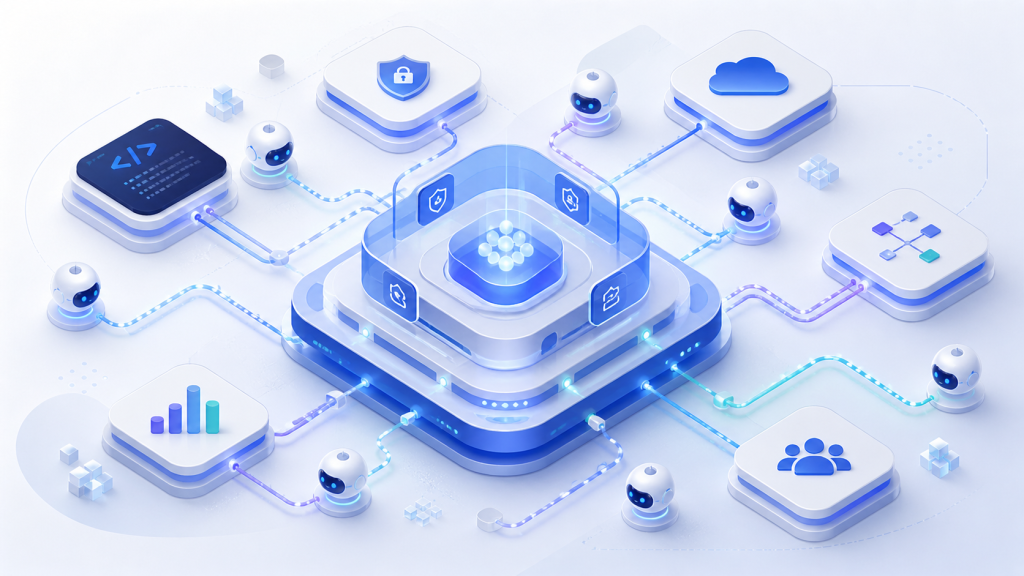
Models will keep changing. Developer tools will keep changing. The winners and losers in the AI market will keep shifting. But enterprises still need a coherent way to manage how software gets built.
That means workflow. Governance. Security. Context. Measurement. Integration. Standards. Accountability. Those are platform problems.
It is completely reasonable for developers to experiment with different AI tools. Some may prefer one model for reasoning, another for coding, another for documentation, another for design exploration. That experimentation is part of how the ecosystem moves forward. But enterprise software delivery cannot be built on unmanaged tool sprawl.
If every team uses different tools, different standards, different security assumptions, and different workflows, the organization may see pockets of productivity while increasing overall risk and inconsistency. That is why the question should not be “Which model wins everything?” The better question is “What platform governs how AI-assisted software delivery happens?”
For many organizations, GitHub is a natural answer because it already sits at the center of the development workflow. The code is there. Pull requests are there. Actions workflows are there. Security findings are there. Issues and project context may be there. Developer collaboration is there. Increasingly, AI assistance is there too.
That gives GitHub an important role in the agentic future. Not because models do not matter. They do. But because models need context, workflow, and governance to create enterprise value. A powerful model used in isolation can help an individual developer. A powerful model connected to the software delivery platform can help a team improve how work moves from idea to production.
That is a very different level of value. The same principle applies to agents. An agent that can perform a task is interesting. An agent that can perform a task inside the right workflow, with the right permissions, context, review process, and auditability, is much more useful to an enterprise. That is where the platform matters.
The future of software development will almost certainly include multiple models, multiple agents, and multiple tools. I do not think enterprises should pretend otherwise. But the organizations that get the most value will be the ones that create a coherent operating model around them.
Where does AI show up in the SDLC? How are suggestions reviewed? How are agents assigned work? What actions can they take? What needs human approval? How are risks detected? How is value measured? How do teams share patterns? Those questions do not go away because a model gets better. They become more important.
That is why I believe the future is agentic, but the platform still matters. Maybe more than ever.